
Beat-Jack Cut & Pastes All Up In Your Face
Hot off the success of AmeriKKKa’s Most Wanted, Priority Records were (in his own words) ‘beggin’ Ice Cube to release some new music as soon as possible. The result was the Kill At Will EP, which delivered a couple of remixes and skits alongside ‘The Product’ (one of my favourite Ice Cube songs ever) and the all-conquering ‘Jackin’ For Beats’.
The Bomb Squad weren’t involved this time around – Eric Sadler theorised to Brian Coleman in Check The Technique, Volume 2 that this was because Cube didn’t want to split the money this time around, and Sir Jinx reported not earning a dime from producing this EP so I guess Street Knowledge Management took the whole kit and kaboodle? As Cube tells it:
‘I had thought of that concept, because at the time so many dope beats had come out. I just wanted to rap over all that shit…I’m not going off on anyone in that song, I just want their beats!’
Once the beats had been chosen, Sir Jinx and Chilly Chill put it together, ‘mixtape style’ and then Cube (with a little help from his cousin Del) blew the roof off that sucker.
This wasn’t the first time that a cut-up edit style track had been used to rap over (Original Concept did something similar on ‘Runnin’ Yo Mouth’ in 1987) but since Cube was on top of the world at this point in terms of popularity, it was his version that left a lasting legacy. New Yorkers such as Cormega and Biggie Smalls would go onto adapt this style for mixtapes and white labels, and while Sticky Fingaz and Talib Kweli went as far as just using the same name for their versions.
But enough about remakes, we’re here to talk bootlegs, dagnabbit. Fast-forward to 1995, and Stretch Armstrong and DJ Mighty Mi started releasing white label remix singles of rap posse cuts. I asked Mighty Mi about this period last year:
I think one of the one of the first ones I remember hearing was the one with the D&D All-Stars and the Red and Meth ‘How High’. Was that like one of the first ones you put out?
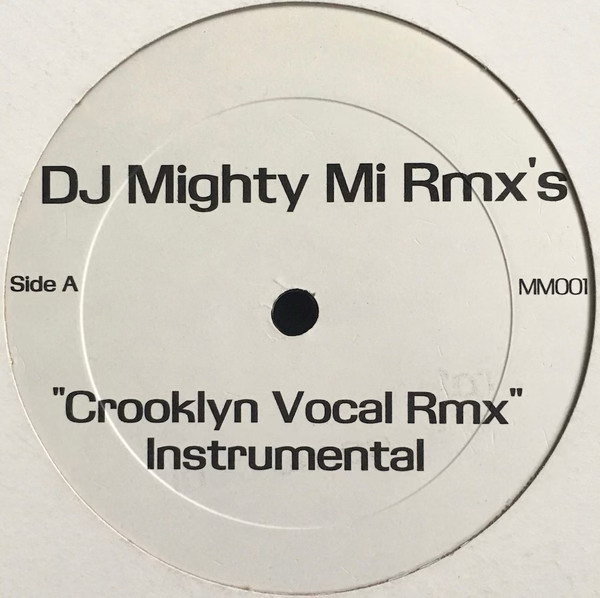
I think the Crooklyn Dodgers one was actually first, in the same format of playing their famous beats when they go. I can’t remember when I started getting that idea to do that. I think it had come from something else, but I’ve really kind of stuck to it throughout the years. [laughs]
Were those acapellas from records or did you get them from the labels?
I’m pretty sure they were on their records because we would actually put them in live – that’s how we would get the vocals on. That’s why I loved recording them at Stretch’s house because he was actually amazing at it. First you would loop-up the instrumental bed in the MPC and you would lay that down first. So it would be eight bars of ‘I Got it Made’ by Special Ed into eight bars of the Black Moon song into eight bars of ‘The Symphony’. That was the formula. So you would lay down the instrumentals first, then the hard part was flying in the vocals live. But Stretch was incredible at it – he was a musician first before he was a DJ, so he had perfect timing. So I would love to do it at his crib because he would do it in one take. And I knew that the vocals would just be so tight. [laughs]
So you weren’t sampling the vocals? He was blending it live?
Yeah. We’d lay down the instrumental first onto ADAT and then you’d have to put the vocals in live. If you messed up you could still start over because you were actually recording onto an eight track. But he was just so good at it that I knew it would be the quickest and most precise way to do it.
I would say the ‘1,2 Pass It’ and the ‘Crooklyn’ were kind of attempts to make songs that were not quite popular enough sounding to play in the club? Like an excuse to now play it in the club – I’m putting Special Ed’s biggest records under his verses, which makes it more appealing in a nightclub situation than just hearing the original Crooklyn Dodgers Premier beat. Even though it’s brilliant – maybe not for the clubs. That was my initial thinking where I put their own famous beats behind them – to make it appealing to more people.
As Mighty Mi alluded to, he continued to revisit this technique as recently as 2001 with the Eastern Conference All-Stars Air Max ‘95 Remix.
In 1996, Spinbad and JS-1 rose the stakes again when they dropped their Cold Cuts Remixes tape, which opened with a dizzying remix of KRS-One’s ‘Hip-Hop Vs. Rap’ that proved to be popular enough that it appeared on two separate white labels. 1Spinbad takes the medley/cut-up technique to new heights by dropping in the beat for each song that KRS references, as he shouts out rap staples from the past. Spinbad then went on to release the album couple of tapes focusing on cutting and blending 80’s pop, but with in a hip-hop style.
DJ JS-1 explained how it all went down:
In the 90’s we were doing the 4-track mixes and really trying to go crazy producing mixtapes. We scratched hooks from songs, added songs from movies and all stuff like that. On the cover with him on the original Rock The Casbah mixtape, it’s me, him and A.Vee. I’m wearing my Jungle Brothers camouflage hat. [laughs] We took The Breakfast Club cover. Me and Spinbad had made a tape called Cold Cuts Remixes and we sold a lot of that. Then he put the 80’s tape together, I did a few scratches on that I think, I was at his house. We were always cutting up 80’s stuff but nobody was making a mixtape with it, and he was like, ‘I’m just gonna go for it and put all the movie stuff on it like we do for hip-hop mixes.’ I don’t even know what the numbers would be on that, sales-wise, but that tape did excellent. It really got around.
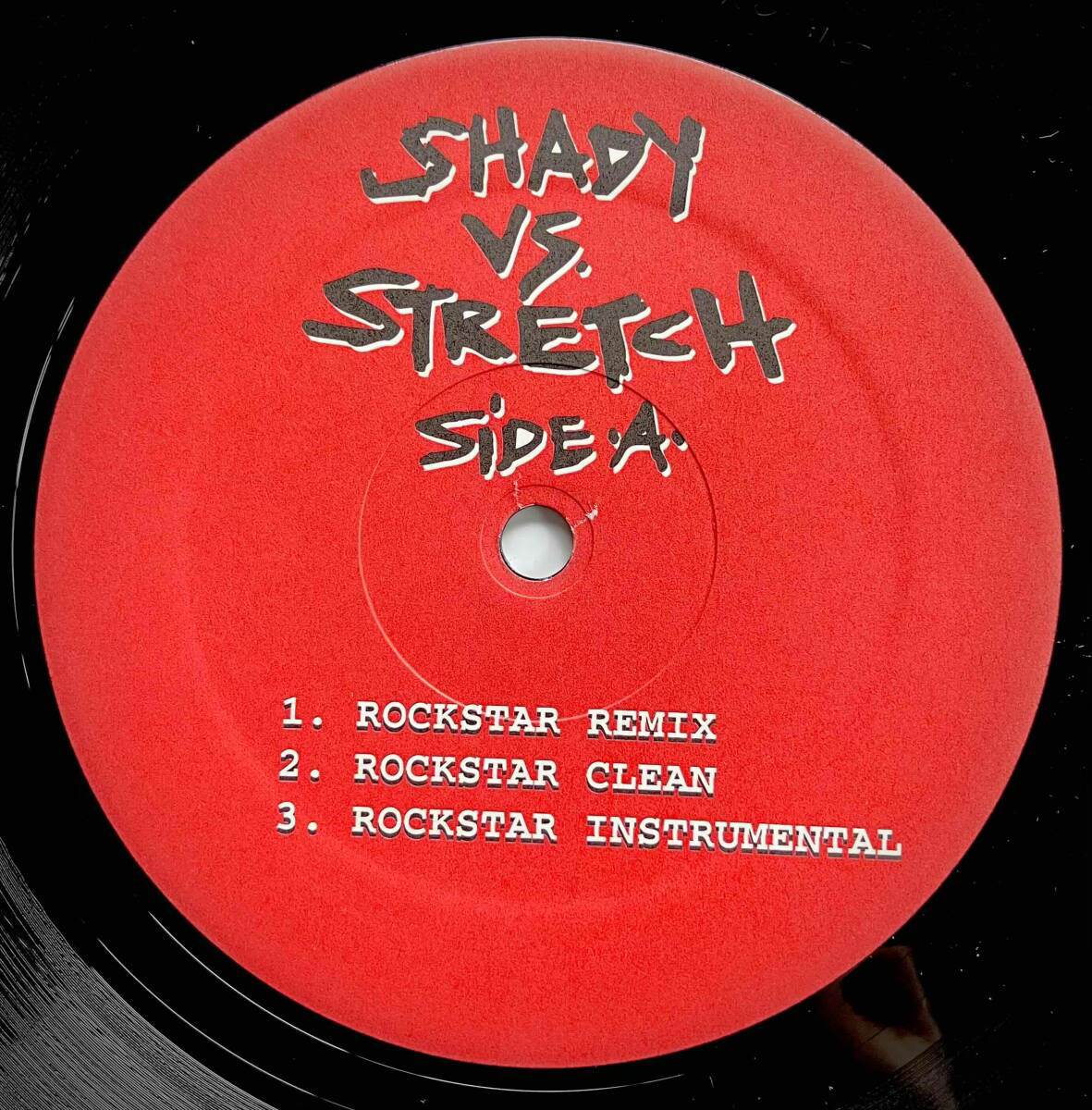
By the time 1999 rolled around, Stretch was DJing for Eminem and put out the Shady Vs. Stretch 12”, which contained the ‘Rockstar Remix’ of ‘My Name Is’ (a nod to Boogie Down Productions’ ‘Dope Beat’) on the a-side with a ‘Jackin’ For Beats’ style freestyle session on the flip, titled ‘Dre Beats’, thus bringing everything full-circle before the Mash-Up Era of the 00s took over and we had to endure stuff like Jay-Z making a CD with Linken Park and mixtapes where Biggie raps are put over Ringo Star solo loops (guess it would be called Bingo if it doesn’t already exist).
The entire Cold Cuts tape is amazing, as DJ JS-1 and Spinbad get a side each to really go all-out with blending rap accapellas with classic instrumentals in a way that I hadn’t previously heard done to that extent. It was the the ultimate evolution of the blend tape tradition in a lot of ways.